
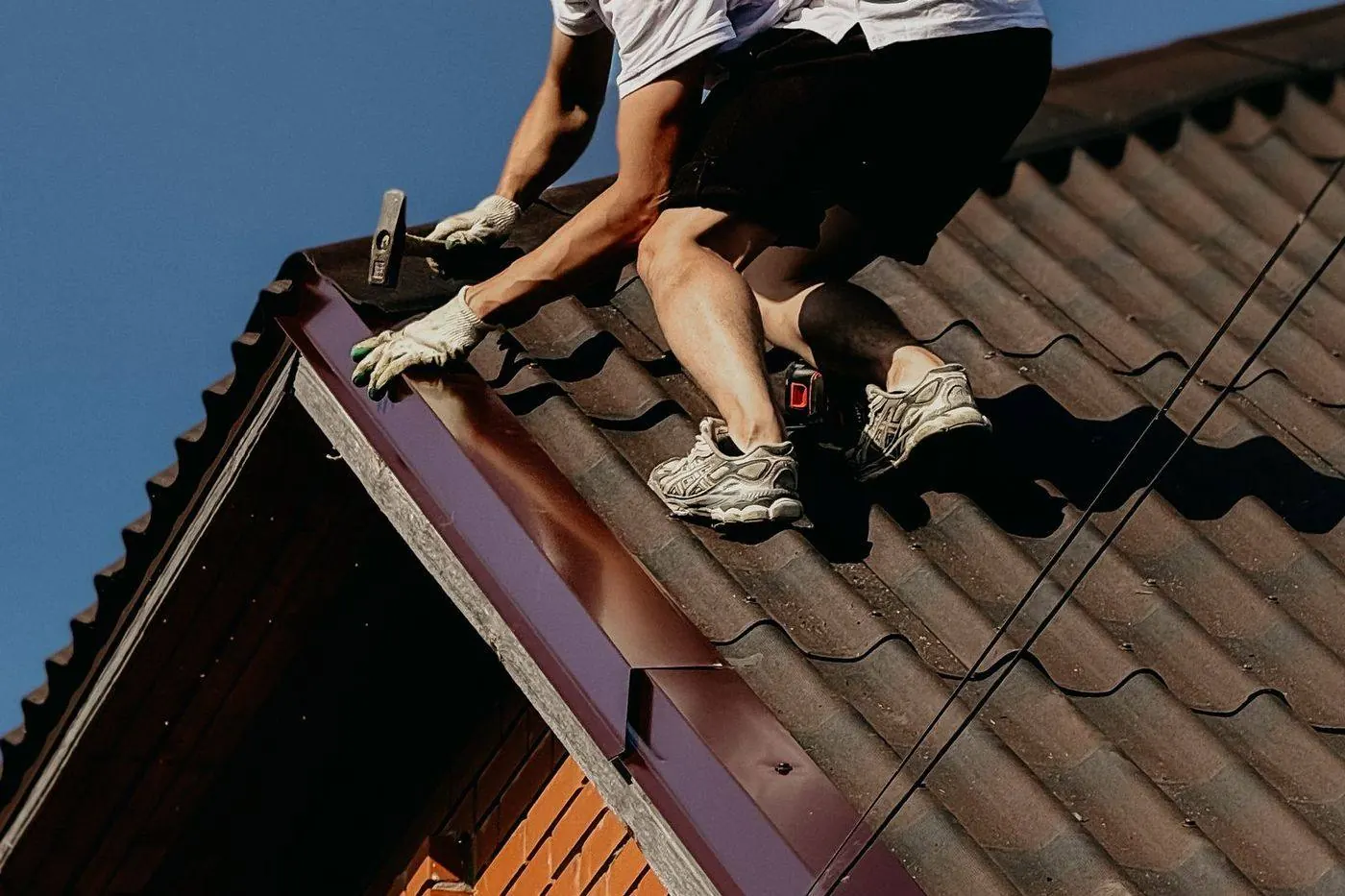
Flashing Repair • Sayreville, NJ
Roof Flashing Repair in Sayreville, NJ
Leak showing up around a chimney, wall or skylight?
That's classic flashing failure. Call (732) 641-1662 to reach an independent local roofing provider who can find the failed joint and repair it properly, not just smear sealant over it. If you're searching for roof flashing repair near me in Sayreville, one call connects you with an independent local roofing contractor.
Why do leaks cluster around chimneys and walls?
Those joints rely on flashing, thin metal that seals where the roof meets something that is not roof.
It expands and contracts with temperature, working fasteners loose, while sealant dries and cracks. When flashing fails, water runs behind shingles into wall cavities, showing up far from the breach.
Call (732) 641-1662 and describe what you see.
Roof flashing repair
Roof flashing is the thin metal that seals the joints where a roof meets chimneys, vents, skylights, and valleys. Roof flashing repair means resealing or replacing that metal when it cracks, lifts, or corrodes and starts letting water in.
Flashing is the thin metal, usually aluminum, galvanized steel or copper, that seals the joints where your roof meets something that isn't roof: chimneys, walls, skylights, vent pipes and valleys. Shingles shed water on open slopes, but at every joint and penetration the roof needs a separate waterproofing system. That's flashing. If you are looking for roof flashing repair near me in Sayreville, the leak is often at a chimney base, a vent, or a valley. A roof flashing leak repair in NJ usually means resealing the failed joint or replacing the damaged metal.
It fails more often than shingles do, and for simple reasons. The metal expands and contracts with temperature, working fasteners loose over the years. Sealant dries, cracks and pulls away. Wind lifts edges. And in older Sayreville homes, the original flashing may be decades old, far past the point where it can still do its job. When flashing fails, water doesn't drip politely onto the shingles below; it runs behind them, into the wall cavity or down the chimney chase, showing up far from the actual breach.
Methods
How flashing fails, and how repair works
Resealing works when the metal itself is sound but the sealant has aged out. The provider cleans the joint, removes the old cracked sealant, and applies new roofing sealant or polyurethane caulk along the top edge where flashing meets masonry or wall. It's a legitimate repair for a specific problem, dried sealant, and it buys years when the metal underneath is still solid.
Rebuilding is needed when the metal is rusted through, bent, pulling away, or was installed wrong in the first place. This means removing the surrounding shingles, pulling the old flashing, installing new step or continuous flashing woven correctly with the shingle courses, and re-shingling over it. It's more work, but it's the only fix that lasts, sealant over rusted metal is just a postponement.
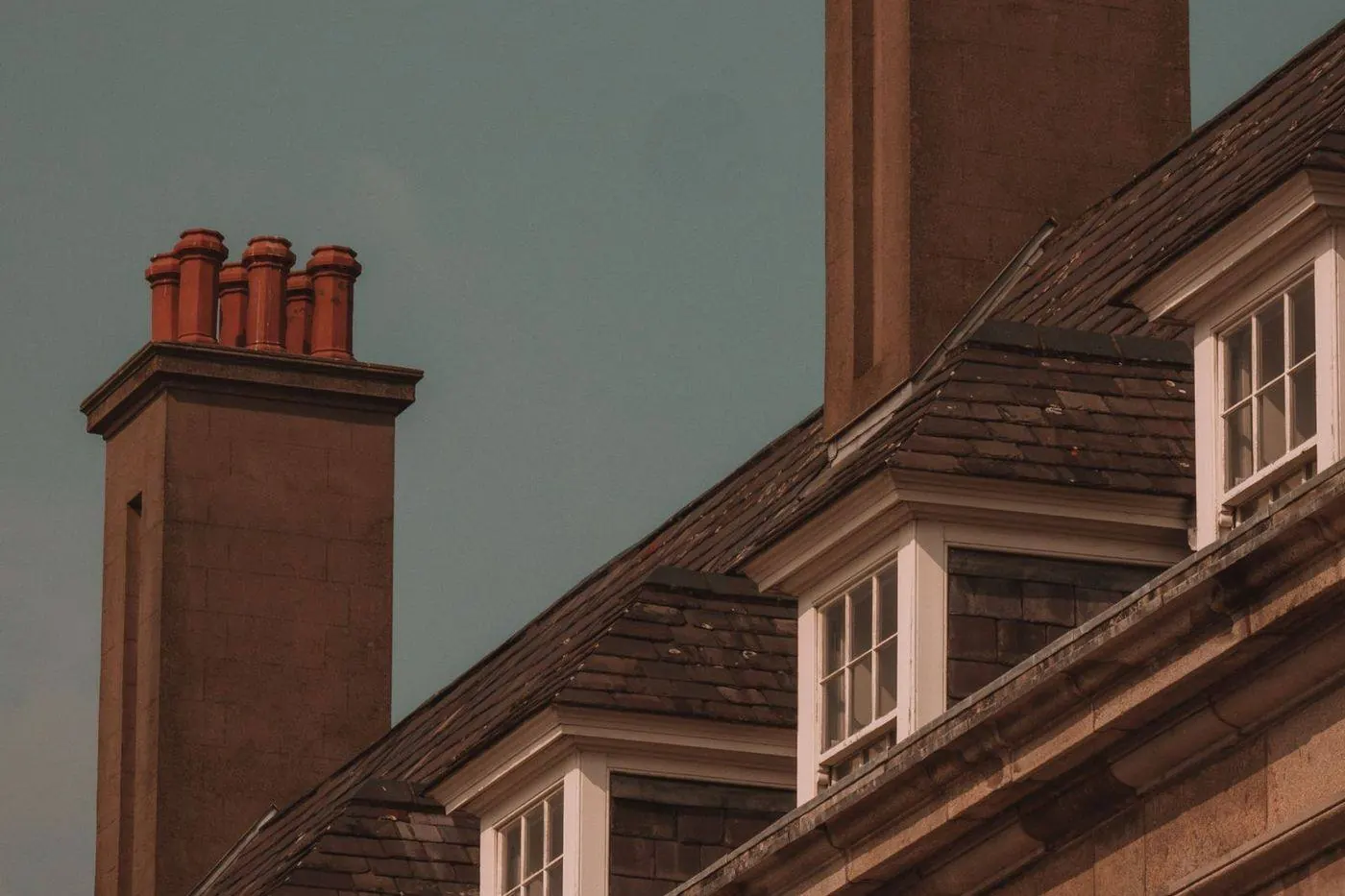
The most common flashing locations a provider will check: chimney flashing (step flashing plus counterflashing set into the mortar), valley flashing (the metal channel where two roof slopes meet), wall flashing (where a roof meets a siding wall, common on split-levels), vent pipe boots (the rubber collar around plumbing stacks, see our vent and pipe boot repair page), and skylight flashing kits (see skylight leak repair).
Know the signs
8 warning signs your flashing is failing
- Stains around the chimney. Brown rings on the ceiling or wall adjacent to the fireplace, the single most common flashing leak in older homes.
- Damp wall where the roof meets siding. Water entering at wall flashing runs down inside the wall cavity and appears as bubbling paint or soft drywall.
- Drips from a skylight frame. Often the skylight's flashing kit, not the glass, water enters at the curb and travels along the frame.
- Stains in a roof valley's path. A line of staining that follows the valley downhill inside the attic points straight at valley flashing.
- Visible rust on the metal. From the ground with binoculars: orange-brown staining on flashing around chimneys or walls means the metal is corroding through.
- Cracked or missing sealant. Dried, shrunken caulk pulling away from the masonry joint, the seal is gone even if the metal looks fine.
- Leaks only in wind-driven rain. Flashing relies on overlap; wind pushes water uphill past lifted edges that calm rain never reaches.
- A previous "sealant-only" fix that failed. If someone already caulked it once and the leak returned, the metal underneath needs rebuilding, not another tube of sealant.
Local causes
What causes flashing to fail in Sayreville
Age comes first. Much of Sayreville's housing stock, especially in established sections like Melrose, still carries its original flashing. Galvanized steel flashing can last decades, but sealant doesn't, and once the seal goes the metal follows. If your roof is over 20 years old and the flashing has never been touched, it's living on borrowed time. When any of these hit, a roof flashing repair replaces or reseals the failed section, including chimney flashing repair in Sayreville and valley flashing repair where two slopes meet.
Freeze-thaw cycles pry at every joint. Water gets behind a slightly lifted flashing edge, freezes, expands, and lifts it a fraction more. Repeat that a few hundred times over New Jersey winters and the gap becomes a channel.
Wind uplift works the edges loose, particularly on wall flashing and the top edge of chimney counterflashing. After a nor'easter, those are the first places a roofer checks.
Salt air accelerates corrosion for homes near the Raritan Bay side, Morgan and the waterfront blocks see metal age faster than the same flashing would inland. And do-it-yourself sealant jobs, a thick bead of the wrong caulk smeared over the joint, trap water behind the repair and rot the very thing they were meant to protect.
Before you call
Safe checks you can do first
- Binocular scan. From the ground, look at chimney bases, wall junctions and valleys. Rust streaks, lifted metal edges or missing sealant are visible with cheap binoculars.
- Attic trace. With a flashlight, look for staining on the underside of the decking near chimneys, valleys and where the roof meets walls. Note which feature it's closest to, that tells the provider where to start.
- Rain test (observation only). During the next rain, watch where the drip appears relative to the chimney or wall. "Two feet to the left of the fireplace" is genuinely useful information.
- Photo the exterior. Zoomed phone photos of the chimney base and any visible flashing give the provider a preview before they arrive.
Pro tip: Don't caulk it yourself as a "temporary" fix unless you know exactly where the water enters. Sealant in the wrong place dams water inside the joint and turns a small repair into a rebuild.
What to expect
The flashing repair visit, step by step
- Interview and interior look. Where's the stain, when did it start, does wind matter? Then the attic, tracing the stain back to the nearest roof feature.
- Roof-level inspection. Every flashing joint near the suspect area gets hands-on checking, lifted edges, rust, cracked sealant, loose counterflashing, nail pops through the metal.
- The verdict: reseal or rebuild. Sound metal plus dead sealant means resealing. Rusted, bent or wrongly installed metal means rebuilding. A straight provider shows you the difference up close.
- The repair. Resealing takes an hour or two. Rebuilding means carefully removing surrounding shingles, installing new flashing woven with the courses, and re-shingling, usually a half to full day.
- Water test and walkthrough. A controlled water test over the repaired joint confirms it holds, and you get photos of the before and after plus a written description of what was done.
Pricing
What affects the cost of flashing repair
| Factor | Why it matters |
|---|---|
| Reseal vs. rebuild | The biggest cost driver. Resealing is a couple of hours; rebuilding means new metal, removed shingles and a full day. |
| Which flashing | A vent boot reseal is quick. Chimney flashing with counterflashing set into mortar joints is skilled, slow work. |
| Metal choice | Aluminum and galvanized steel are standard; copper costs more but outlasts the roof itself. |
| Roof access | Steep pitches and multi-story chimneys need more safety setup and time. |
| Hidden damage | Long-running flashing leaks rot decking and framing behind the joint, discovered only once the old flashing comes off. |
Urgency check
When flashing failure is an emergency
Most flashing leaks start slow, a stain that grows over months. But call for emergency roof leak repair if water is actively dripping from around a chimney or skylight, if a storm has torn flashing visibly loose, or if the leak is near electrical fixtures. Active water through a failed joint can soak insulation and framing fast, and a loose flashing edge in high wind can peel further with every gust.
Leak near a chimney or wall?
That's textbook flashing failure. Call and reach an independent roofing provider.
(732) 641-1662
Flashing failure doesn't fix itself
Every storm widens the gap. Call now and get connected with an independent roofing provider serving Sayreville, NJ.
A failed joint won't seal itself
One call connects you with an independent roofing provider serving Sayreville, NJ. No obligation to book.
FAQ
Roof flashing repair questions
Straight answers about Roof flashing repair in Sayreville, NJ.
Location is the giveaway. Shingle leaks can appear anywhere, but flashing leaks cluster around features, chimneys, walls, skylights, valleys, vent pipes. If the stain sits next to one of those, flashing is the prime suspect. A roofer confirms it by inspecting the joint itself for rust, gaps or failed sealant.
Only if the metal is sound. Fresh sealant over solid flashing lasts years. Sealant over rusted, bent or detached metal is a short postponement, water finds the gap the sealant can't bridge. An honest provider will show you the metal's condition and explain which one you're paying for.
A reseal is typically one to two hours. A chimney flashing rebuild usually takes a half to full day, depending on the chimney size, the roof pitch and whether hidden rot is found once the old flashing comes off.
Yes, always. New shingles over old flashing is one of the most common regrets in roofing. The labor to replace flashing is mostly in removing and reinstalling the surrounding shingles, so doing it during a re-roof costs far less than doing it separately later.
Step flashing is the set of small L-shaped metal pieces woven between shingle courses along a chimney or wall, each piece sheds water onto the shingle below. Counterflashing is the second layer, set into the chimney's mortar joints, that covers the top edge of the step flashing. A chimney needs both, correctly overlapped, to stay dry.
Yes, most chimney leaks are flashing problems, which is exactly this service. If the issue turns out to be the chimney crown or masonry itself rather than the flashing, see our chimney leak repair page. The provider will identify which one it is during the inspection.
Call (732) 641-1662. Sayreville Roof Leak Repair is a referral service that connects your call with an independent local roofing contractor providing roof flashing repair in Sayreville and nearby Middlesex County towns. No searching through listings and no waiting on callbacks, one call puts you through to a nearby roofer.
Flashing is the metal barrier at every roof joint and opening. It leaks when sealant dries out, nails back out, or the metal corrodes or lifts in wind. Because joints move with temperature changes, flashing is the most common source of roof leaks.
Look for rust, lifted edges, cracked sealant, or stains on interior walls below a chimney or vent. A provider confirms it with an up-close inspection of every joint.
Small gaps can often be resealed. Bent, corroded, or badly lifted flashing usually needs replacement. A provider will tell you which one your roof needs after inspecting it.
Fairly urgent. Flashing leaks let water straight into the structure around chimneys and vents, where it rots wood and feeds mold. Call (732) 641-1662 and we will connect you with an independent provider who can assess it.
Related services and areas
Dealing with a leak that isn't near any chimney, wall or skylight? Start with our main Sayreville roof leak repair guide to trace it from the stain back to the source. Related: Chimney leak repair, Skylight leak repair, Shingle roof leak repair, Roof leak repair in Melrose.
Contact
Get in touch
The fastest way to reach us is a phone call. No forms, no waiting.
Sayreville, NJ 08872 and nearby towns
You reach our referral line. No obligation to book.
Call Now
(732) 641-1662Speak with our referral line about your roof leak. Describe what you see and we will connect you with an independent local provider.
Tap to CallService Areas
Roof leak repair near you
We take calls for Sayreville and these nearby towns. Provider availability varies by day and town. For roof flashing repair near me, call (732) 641-1662 and we will connect you with an independent local provider.