
How to Find a Roof Leak: A Homeowner's Guide
Start inside: the attic inspection
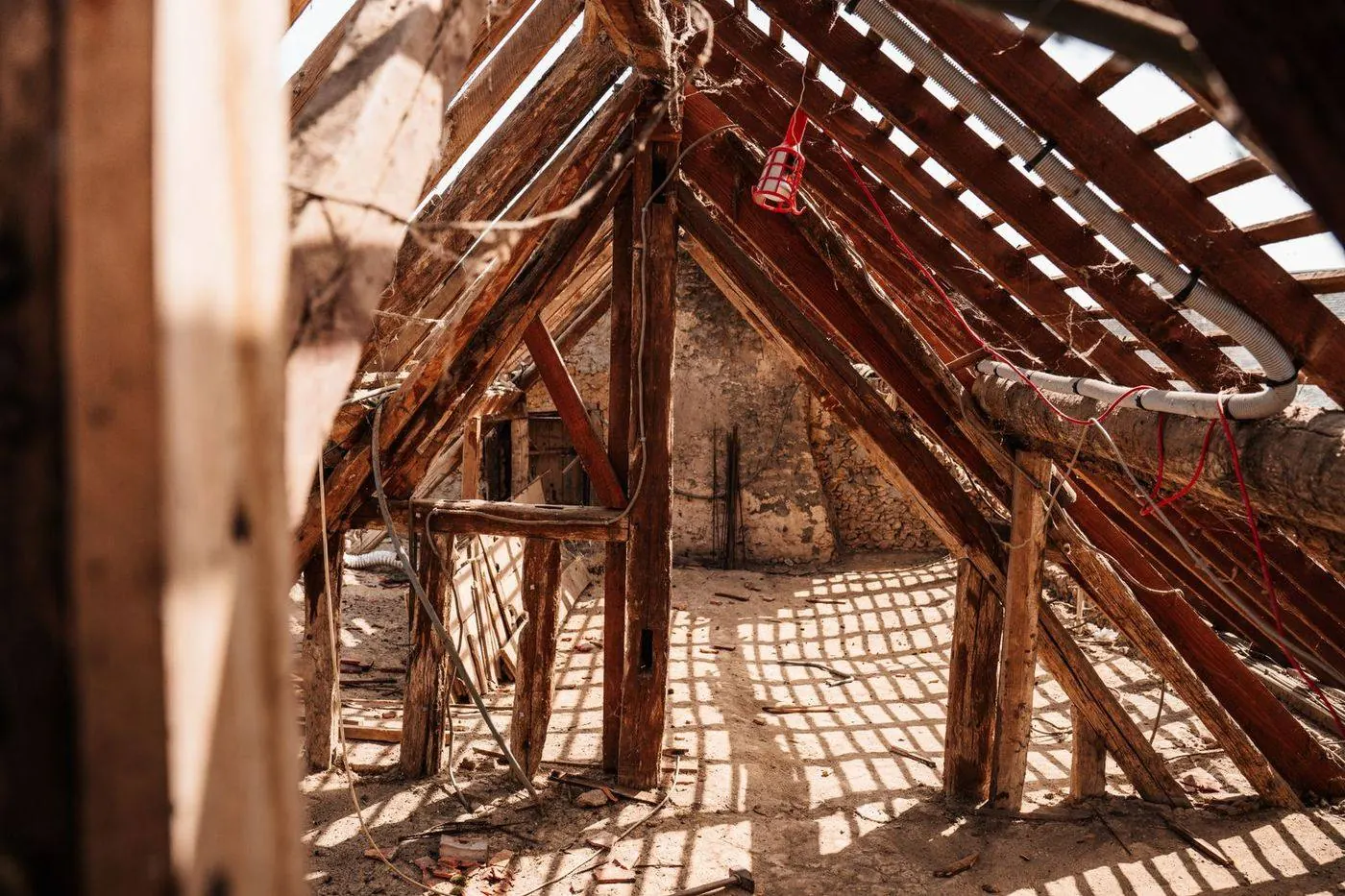
The best leak-finding tool is a flashlight and a rainy day. In the attic, look for dark stains on the underside of the roof deck, damp insulation, rusted nail heads and any drips. Mark each wet spot with chalk or tape. Then look uphill: water runs down along rafters and decking, so the entry point is almost always higher up the slope than the stain on your ceiling.
Trace the water path
Follow each stain upward to the highest wet point you can find. Measure its distance from a fixed reference like the ridge or a gable end, then transfer that measurement to the roof surface outside. This narrows the search area from the whole roof to a patch a few feet across, which is exactly what a provider does on a roof leak detection visit before any repair begins.
Check the usual suspects
Roughly nine out of ten residential leaks come from penetrations and joints, not the open field of shingles. Check roof flashing around chimneys, walls and skylights, rubber pipe boots around plumbing vents (see our vent pipe leak repair guide), and the chimney crown and mortar. On the roof surface, look for lifted shingle tabs, nail pops and cracked sealant, all from the ladder, never by walking a wet roof.
The controlled water test
Professionals confirm a suspected entry point with a garden hose, working from the lowest suspect area upward, soaking one section at a time while someone watches inside the attic. This is effective but slow, and it is easy to misread. If the attic shows multiple wet areas or you cannot safely access the roof, skip the DIY test and call (732) 641-1662.
When to call a professional
Call when the leak is active, when the source is not obvious after an attic check, when the roof is steep or high, or when the stain keeps growing. Sayreville Roof Leak Repair connects your call with an independent local provider who traces the leak properly instead of patching the stain. One call to (732) 641-1662 is faster than a weekend of guessing while water keeps coming in.
FAQ
Common questions
Light rain may not reach the failure point. Heavy rain overwhelms marginal flashing, drives water sideways under lifted shingles, and exposes leaks that stay dry in drizzle. Wind-driven rain is an even stricter test.
Yes. Condensation from poor attic ventilation, plumbing leaks, and siding or window failures can all mimic roof leaks. That is why tracing from the attic matters: a true roof leak leaves a trail on the roof deck.
An experienced provider usually narrows it down within the first visit using attic inspection and targeted water testing. Tricky leaks with multiple entry points can take longer, which is another reason diagnosis comes before repair.
Roof leaking? Get it diagnosed right.
One call connects you with an independent local roofing provider. No obligation to book.